
Injured by Dangerous Drugs or Defective Medical Devices?
Call Us We Can Help You!

Medically Reviewed & Written by Dr. Shezad Malik, M.D., J.D., Board-Certified Physician & Trial Attorney
The global demand for Ozempic (Semaglutide) has transformed the clinical management of Type 2 Diabetes and chronic weight loss.
If you were diagnosed with NAION or suffered severe vision loss after using Ozempic or Wegovy, you may be eligible to file a product liability lawsuit for significant financial compensation.
Or speak with our intake team immediately at 214-390-3189. Available 24/7.
Please click our Live Chat Agent button in the bottom corner of your screen to launch an instant intake review, or call us directly:
Use this clinical comparison table to determine if your vision changes qualify for an Ozempic product liability claim or stem from traditional diabetic complications.
| Clinical Feature | Standard Diabetic Retinopathy (Not Eligible for Claims) | Semaglutide-Induced NAION (Highly Eligible Case Target) |
|---|---|---|
| Onset & Speed | Gradual & Progressive: Vision deteriorates slowly over months or years. Often shows no early warning symptoms. | Sudden & Acute: Rapid, unprovoked vision loss that occurs instantly, often discovered immediately upon waking up. |
| Visual Field Deficit | Scattered Blur / Floaters: Visual deficits present as dark spots, “floaters,” or cobweb-like lines. | Altitudinal Field Deficit: A clear, dark horizontal shadow or “window shade” that cuts off the upper or lower half of vision. |
| Eye Involvement | Bilateral (Both Eyes): Systemic blood sugar damage inherently alters both retinas simultaneously. | Unilateral (One Eye): Ischemic failure typically affects one optic nerve head independently, leaving the other eye intact. |
| Primary Pathology | Retinal Damage: Leaky retinal blood vessels and abnormal new vessel growth caused by chronic glucose imbalances. | Optic Nerve Infarction: An “eye stroke” caused by a sudden lack of blood flow and microvascular perfusion to the optic nerve head. |
| Prognosis | Treatable / Manageable: Progression can often be halted or improved using laser surgeries or blood sugar stabilization. | Irreversible Blindness: No current validated medical treatment can reverse the structural tissue death. Damage is permanent. |
You do not have to fight this alone. At the DR SHEZAD MALIK LAW FIRM, we combine deep medical insight with fierce legal advocacy to hold powerful pharmaceutical companies accountable.
Call us today at 214-390-3189 for a free, confidential consultation, or read on to learn the facts about the Ozempic vision loss lawsuits.
As both a licensed medical doctor and an experienced product liability lawyer, Dr. Shezad Malik brings an exceptional perspective to pharmaceutical injuries. He understands the complex vascular science behind Ozempic-related eye strokes just as deeply as the aggressive legal tactics required to win multi-million dollar cases against corporate drug manufacturing giants.
However, robust post-market surveillance data and landmark epidemiological cohort reviews have exposed a devastating ophthalmic complication: a direct association between semaglutide exposure and Non-Arteritic Ischemic Optic Neuropathy (NAION), a condition leading to sudden, irreversible vision loss.
As both a licensed physician and a product liability trial attorney, I evaluate dangerous drug complications through a dual lens. I understand the precise ischemic mechanisms destroying your optic nerve fibers, and I know exactly how to dismantle corporate defense medical pretexts in state and federal courts.
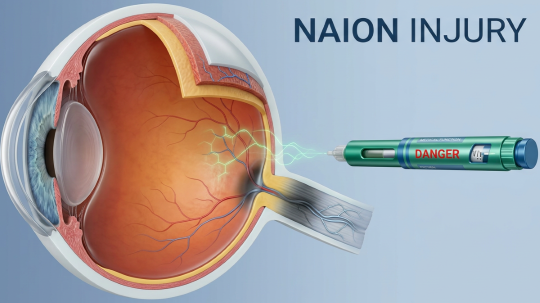
The clinical illustration above visualizes the microvascular complications currently under intense investigation in ongoing semaglutide litigation nationwide. Unlike standard diabetic eye conditions like retinopathy, which develop slowly over decades, Non-Arteritic Ischemic Optic Neuropathy (NAION) functions as an acute vascular event—essentially an industrial-strength stroke of the eye.
As depicted, the use of Ozempic and similar injections can trigger rapid, major shifts in baseline metabolic markers and localized blood pressure. For patients with a naturally crowded optic disc structure, this sudden change can cause a localized compartment syndrome. The microvascular blood vessels feeding the front part of the optic nerve suddenly collapse, starving the nerve head of vital oxygen, causing rapid tissue death, and resulting in sudden, painless, and irreversible vision loss.
Below is the definitive medical-legal status report on Ozempic-induced NAION blindness, corporate failure to warn, and your financial rights.
The optic nerve acts as the core high-speed data cable connecting the retina to the brain’s visual cortex. Non-Arteritic Ischemic Optic Neuropathy (NAION) occurs when the microvascular blood supply feeding the front portion of the optic nerve is suddenly and catastrophically disrupted. Deprived of vital oxygen and nutrients, the nerve axons suffer rapid localized tissue death.
Often described clinically as a “stroke of the eye,” NAION manifests as sudden, completely painless vision loss—frequently occurring overnight, causing patients to wake up with profound blindness or a dark shadow obscuring their field of view.
NAION is the most common cause of sudden optic nerve blindness in patients over the age of 50. Well-established baseline risk factors include:
| Risk Factor Category | Specific Risk Conditions & Influences |
|---|---|
| Underlying Medical Conditions | High blood pressure (hypertension), poorly controlled diabetes, high cholesterol, and sleep apnea. |
| Anatomical Predisposition | A naturally “crowded” optic disc structure where the optic nerve exits the back of the eye. Individuals born with a naturally compressed or crowded optic disc structure are physically predisposed to nerve swelling and ischemia. |
| Lifestyle & Medications | History of smoking and use of certain prescription drugs (such as erectile dysfunction medications). |
The vascular damage inflicted by NAION is permanent and irreversible. There are no universally effective surgical or medical interventions to restore dead optic nerve fibers, and patients can face a secondary 15% cumulative risk of the disease process moving to the unaffected eye within five years.
Non-Arteritic Ischemic Optic Neuropathy (NAION) usually appears without warning. If you or a loved one is taking Ozempic, monitor your vision for these critical indicators:
True diagnosis tracking parameters must distinguish NAION from acute angle-closure glaucoma, retinal artery occlusions, or other medical conditions.
Patients showing standard warning indicators must consult with their physician immediately, seek specialized ophthalmic tests, and preserve prescription packaging to protect their legal options.
While Novo Nordisk marketed Ozempic as a metabolic breakthrough, clinical researchers began documenting an alarming spike in sudden optic nerve strokes among patients taking the drug. Multiple world-class epidemiological trials have now established a clear, statistically significant correlation:
| Medical Study & Publication | Research Focus & Methodology | Critical Findings & Legal Significance |
|---|---|---|
| Harvard / Mass Eye and Ear JAMA Ophthalmology (July 2024) | A retrospective matched cohort analysis evaluating over 16,800 patient records. The trial tracked individuals prescribed semaglutide injections (Ozempic/Wegovy) against those on non-GLP-1 treatments. | Identified an alarmingly heightened risk of permanent Non-Arteritic Ischemic Optic Neuropathy (NAION) eye strokes:
|
| University of Bern BMC Medicine (April 2025) | A thorough statistical review utilizing comprehensive multi-year adverse event filings extracted from global regulatory and U.S. FDA safety monitoring reporting systems. | Validated a highly consistent, repeating pattern of sudden visual impairment and ocular vascular events across thousands of semaglutide user reports compared to older traditional antidiabetic treatments. |
| Comparative Optic Studies Neuro-Ophthalmic Reviews (Late 2025) | Multicenter clinical tracking focusing on the baseline differences in structural optic disc crowding and vascular shifts following rapid metabolic changes from GLP-1 and related receptor agonist therapies. | Confirmed that while absolute population incidence remains rare, semaglutide usage structurally increases optic nerve vascular vulnerability, establishing critical evidence for failure-to-warn pharmaceutical claims. |
Why does Ozempic trigger optic nerve strokes? As a physician, I trace the complication to two main hypotheses under active evaluation:
Ozempic may induce rapid, profound drops in systemic blood glucose and blood pressure. While beneficial for long-term weight management, this rapid drop can induce acute microvascular hypoperfusion at the optic nerve head, starving the congested nerve structure of blood.
GLP-1 receptor activation directly alters localized ocular vascular tone, inducing localized fluid shifts or micro-swelling that triggers structural compartment syndrome within a crowded optic disc space.
If you are currently utilizing name-brand Ozempic or Wegovy injections, you must track your visual acuity with extreme vigilance. If you experience any of the warning signs above, it constitutes an immediate medical emergency.
If you took Ozempic or Wegovy, seek immediate ophthalmology evaluation if you notice:
Product liability lawsuits do not allege that Ozempic is ineffective at treating diabetes; they center on a core corporate legal violation: the failure to warn.
Novo Nordisk generated billions of dollars in revenue while failing to accurately detail optic nerve stroke risks on its U.S. warning inserts. For years, patients and prescribing physicians were left completely blind to the fact that a cosmetic or metabolic treatment choice could result in irreversible, permanent vision loss.
GLP-1 NAION lawsuits involving vision loss have expanded, with federal claims centralized and consolidated into MDL No. 3163 in the Eastern District of Pennsylvania under Judge Karen S. Marston, which now includes nearly 150 active cases.
MDL No. 3163 is a federal multidistrict litigation titled In re: Glucagon-Like Peptide-1 Receptor Agonists (GLP-1 RAs) Non-Arteritic Anterior Ischemic Optic Neuropathy Products Liability Litigation.
Medical device and dangerous drug litigation hinges on complex scientific cross-examinations. Corporate drug defense lawyers attempt to dismiss your injury by claiming your vision loss was simply a natural byproduct of your pre-existing diabetes, cataracts, or high blood pressure.
Our dual clinical and legal literacy neutralizes this strategy:
If you or a loved one suffered vision loss while taking a semaglutide medication, you must take fast, calculated legal steps to evaluate your claim before state deadlines pass.
| Damage Category | What this Compensation Covers | Evidence Required |
|---|---|---|
| Past & Future Medical Expenses | All financial costs stemming from your eye injury, including emergency ophthalmology visits, specialized diagnostic testing (OCT scans), corrective treatments, visual aids, and ongoing low-vision therapy. | Medical bills, receipts, insurance statements, and expert physician projections for future care needs. |
| Lost Wages & Earning Capacity | Compensation for time missed from work due to medical treatments, as well as long-term financial recovery if your visual impairment forces you into a lower-paying role or prevents you from working. | W-2 forms, tax returns, pay stubs, and vocational economic analysis reports. |
| Pain, Suffering & Anguish | Non-economic compensation mapping out the profound emotional distress, loss of life enjoyment, depression, and severe anxiety caused by experiencing a sudden loss of eyesight. | Psychological treatment logs, personal impact journals, and testimony from family or friends. |
| Loss of Consortium | Damages awarded to a spouse for the negative impact the eye injury has placed on the marriage relationship, including loss of companionship, support, affection, and aid. | Spousal testimony and comparative medical documentation of daily lifecycle changes. |
If you have suffered a loss of vision, your immediate focus must be on your health. However, you cannot afford to wait to protect your legal rights to file an Ozempic Vision Loss Lawsuit.
Every single state has strict laws called the Statute of Limitations. This is an absolute legal deadline. If you do not file your Ozempic Vision Loss lawsuit before this clock runs out, you will be forever blocked from collecting a single dollar of compensation for your injuries.
By acting early, you allow our firm to immediately track down and lock in key evidence, secure your complete medical charts, and build an airtight case before records are misplaced or deleted by pharmacies.
In many jurisdictions, the filing clock begins ticking the precise moment you discover—or reasonably should have discovered—that your vision loss was associated with semaglutide exposure. Waiting to seek a comprehensive medical-legal review could permanently bar you from seeking financial justice and recovery nationwide.
If you or a loved one underwent a sudden vision change while on an active Ozempic treatment plan, you must execute a strict protective protocol:
| Required Action Step | Clinical & Legal Rationale for Your Case |
|---|---|
| 1. Seek Emergency Ophthalmic Intervention | Immediately schedule a comprehensive dilated eye assessment with a neuro-ophthalmologist to check for mechanical optic disc edema or severe microvascular tissue death. Prompt clinical mapping is vital to confirm a definitive diagnosis. |
| 2. Request Complete Pharmacy Dispensing Logs | Secure all pharmacy medical records detailing dates, exact lot batch numbers, and manufacturer packaging sheets for your name-brand semaglutide prescriptions to definitively prove product exposure. |
| 3. Document the Visual Decline Timeline | Maintain a personal log tracking the timeline of your visual degradation, including dates of onset, related clinical testing panels, and detailed records of any missed employment or lost wages. |
| 4. Preserve Injection Packaging | Keep all remaining retail boxes, delivery pens, and pharmacy information sheets to establish clear product tracing evidence and prevent the destruction of physical proof for your claim. |
Put a dual-licensed Medical Doctor and Trial Attorney in your corner. Speak with our team today.
For more detailed information regarding ongoing semaglutide litigation, patient eligibility, and specific injuries, review our expanded guides below:
The DR SHEZAD MALIK LAW FIRM represents injured patients and families affected by dangerous drug side effects across the entire State of Texas. If you or a loved one suffered sudden vision loss, blindness, or an official diagnosis of Non-Arteritic Ischemic Optic Neuropathy (NAION) after using semaglutide injections, our legal team can review your medical records and file your claim regardless of your location. We proudly review potential pharmaceutical injury cases originating from the following Texas regions, counties, and major metropolitan areas:
No matter where you live in Texas, call 214-390-3189 for an immediate free legal consultation.

Fill out the form or call us at 214-390-3189 to schedule your free consultation.